Can a Tooth Abscess Become a Dental Emergency?
A tooth abscess can start quietly. A little tenderness when chewing, a strange taste in the mouth, mild swelling along the gumline. Plenty of people assume it is something they can watch for a few days, especially if the pain comes and goes. That assumption causes problems.
Yes, a tooth abscess can become a dental emergency, and in some cases it already is by the time a person notices the swelling. An abscess is not simply a bad toothache. It is an infection, usually caused by bacteria that have entered the tooth pulp, the surrounding gum tissue, or the bone that supports the tooth. Once infection is trapped in a small space, pressure builds. Pain often follows, but pain is not the only issue. The real danger is that dental infections can spread beyond the tooth.
That is the point many patients do not realize until they are in significant trouble. Teeth sit close to the jaw, facial spaces, sinuses, and bloodstream. An untreated infection can travel into nearby tissues, create facial swelling, limit the ability to open the mouth, make swallowing difficult, and in severe cases interfere with breathing. It does not happen with every abscess, but it happens often enough that dentists and emergency clinicians take it seriously.
What a tooth abscess actually is
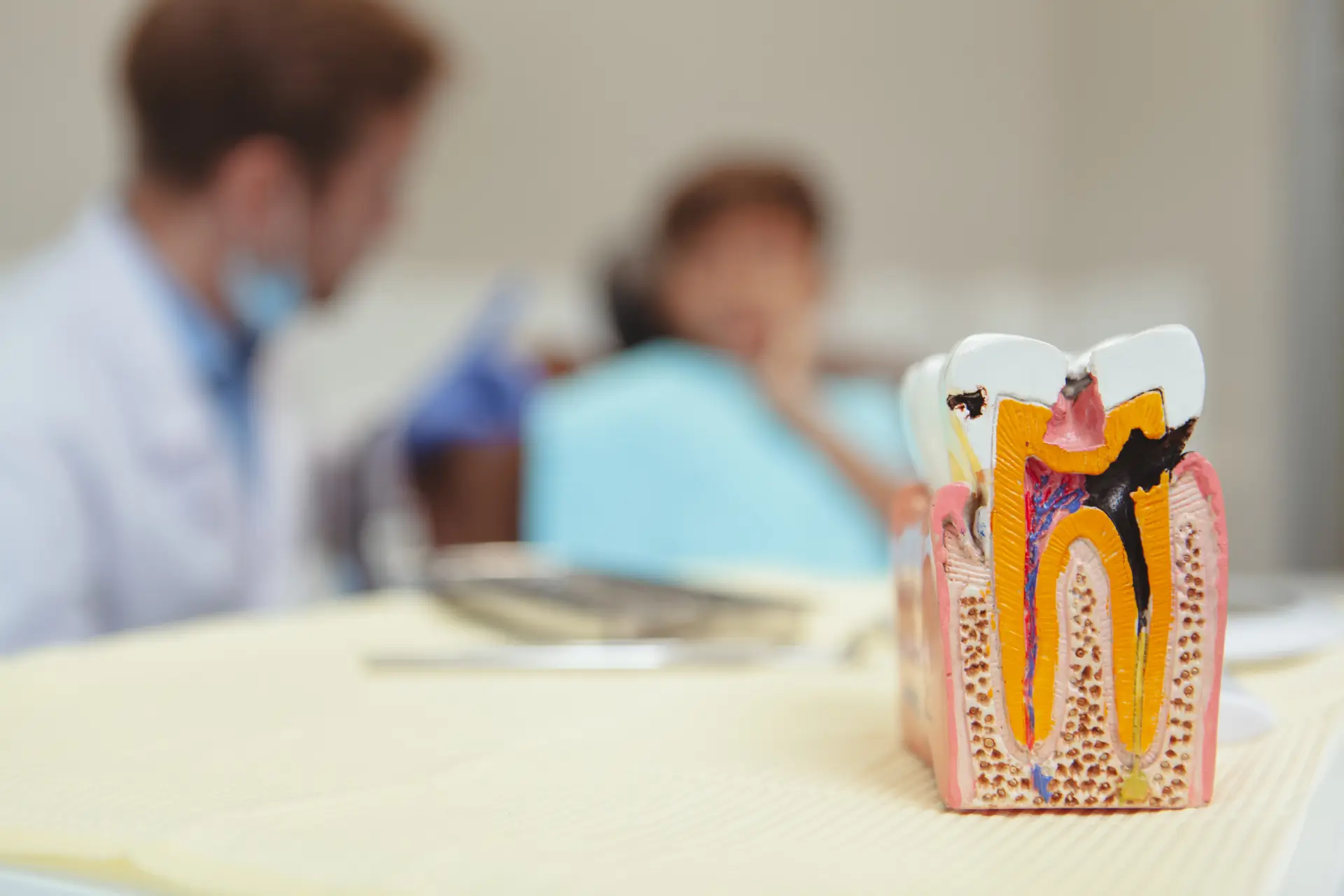
A tooth abscess is a pocket of infection. The two most common patterns seen in practice are a periapical abscess, which usually starts inside the tooth after deep decay or trauma reaches the nerve, and a periodontal abscess, which begins in the supporting gum tissue and periodontal pockets around a tooth. Both can be painful, and both can progress quickly when conditions are right.
Patients often describe the pain as throbbing, deep, or pulsating. It may wake them at night. Heat can make it worse. Biting on the tooth can feel like hitting a bruise with a hammer. Sometimes the pain eases suddenly, which sounds like good news but may simply mean the abscess has started draining. The infection has not gone away, it has changed form.
This is why home remedies do not solve an abscess. Warm salt water may soothe irritated tissue. Over the counter pain medicine may dull the ache for a few hours. A cold compress may reduce some swelling. None of those measures eliminates the source of the infection inside the tooth or beneath the gums.
When an abscess crosses into emergency territory
Not every tooth abscess means a trip to the emergency room that same hour. Many do require urgent dental treatment within a day or two. The distinction matters because people often wait too long, hoping to sort out the schedule later.
A tooth abscess should be treated as a dental emergency when it is no longer confined to a small, manageable area or when it starts affecting basic functions such as swallowing, breathing, or opening the mouth. The red flags are usually recognizable.
- Rapidly increasing facial or gum swelling
- Fever, chills, or feeling generally unwell
- Trouble swallowing, speaking, or breathing
- Severe pain that is not controlled with standard pain relievers
- Swelling that spreads toward the eye, jaw, or neck
Any one of those signs should move Dental Emergency Vitality Dental the situation out of the "I will call when I get a chance" category. Swelling under the jaw or into the neck is especially concerning because infections in those spaces can progress fast. If breathing or swallowing becomes difficult, that is not just a dental issue anymore. It is an immediate medical issue.
One practical rule helps people judge the situation. If the problem is limited to pain and a localized swollen gum bump, you likely need urgent same day or next day dental care. If the problem involves face shape changes, fever, spreading swelling, or difficulty with normal mouth and throat function, you may need emergency medical evaluation right away.
Why abscesses can become dangerous faster than people expect
Dental infections do not follow a neat schedule. I have seen some patients live with an irritated tooth for weeks, then wake up one morning with one side of the face visibly swollen. Others feel severe pain for a day or two, only to have the pain lessen while the swelling gets worse. That second pattern is easy to misread. Less pain can feel like improvement, even while the infection is advancing.
The anatomy explains part of this. Once bacteria reach the pulp chamber of a tooth, pressure builds inside a hard structure that has nowhere to expand. As infection exits the root tip or tracks through gum tissues, it can spread into softer spaces around the jaw. Those spaces do not always produce immediate dramatic pain. They may simply fill with inflammatory fluid and pus while the patient notices fullness, tenderness, and warmth.
General health matters too. People with diabetes, immune suppression, recent chemotherapy, certain autoimmune conditions, or poor nutritional status can deteriorate faster. Smokers and patients with advanced gum disease may also face a more complicated course. The body is trying to wall off the infection, but sometimes it cannot keep up.
Age can shift the risk as well. Young children may not explain symptoms clearly until swelling becomes obvious. Older adults may underreport pain or mistake it for sinus pressure, ear pain, or jaw fatigue. In both groups, delays are common.
Symptoms people often overlook
Not every abscess announces itself with dramatic swelling. A lot of cases begin with subtle signals that are easy to dismiss during a busy week. Lingering sensitivity to hot or cold is a common early clue, especially when the sensation lasts more than a few seconds after the trigger is gone. A bad taste in the mouth, persistent bad breath despite brushing, tenderness when tapping a tooth, or a small pimple-like bump on the gum can all point toward infection.
That little gum bump, often called a fistula or "gum boil" by patients, deserves attention. It can drain intermittently, which reduces pressure and gives the impression that the issue is minor. In reality, it means the body has created a channel for pus to escape. The source is still there.
Jaw stiffness is another symptom that gets underestimated. If someone notices they cannot open comfortably as wide as usual, especially alongside swelling, that suggests the infection may be involving muscles or deeper tissues. Earache without an ear infection can also show up, particularly with lower molar abscesses. The nerves in that region overlap enough to make diagnosis confusing for patients.
Why antibiotics alone are usually not enough
One of the most common misunderstandings around a tooth abscess is the belief that antibiotics are the treatment. They can be part of treatment, but they are rarely the whole solution.
A dental abscess usually has a source that must be physically addressed. If the infection starts inside the pulp of the tooth, the source may need root canal treatment or extraction. If it starts in a periodontal pocket, the area may need drainage, deep cleaning, and management of underlying gum disease. Antibiotics may help the body reduce bacterial spread, especially when there is swelling, fever, or a risk of the infection moving into adjacent spaces. But medication alone often cannot penetrate a closed, pressurized abscess well enough to permanently fix it.
This is why some patients feel temporarily better on antibiotics, only to have the pain return days or weeks later. The drugs reduce the bacterial load, symptoms settle, and the infected tooth remains. Once the medication ends, the problem can flare again.
That pattern matters for another reason. Repeated short courses of antibiotics without definitive dental care are not harmless. They can contribute to resistance, cause side effects, and create false reassurance. A dentist's goal is usually to eliminate the source, not just calm it down.
What treatment usually looks like
The treatment plan depends on where the abscess is, how far it has progressed, whether the tooth can be saved, and whether the infection has spread. For a restorable tooth with infection inside the pulp, root canal treatment is often the preferred option. It removes infected tissue from inside the tooth, disinfects the canals, and seals the space to prevent reinfection. If the tooth is badly broken, structurally unsound, or too compromised to save, extraction may be the wiser choice.
If there is visible swelling, a dentist may also drain the abscess to reduce pressure and improve comfort. In periodontal abscesses, treatment often includes drainage, cleaning of the infected pocket, and careful evaluation of gum and bone support. Imaging helps determine how extensive the damage is and whether Dental Emergency neighboring structures are involved.
Severe cases sometimes need a higher level of care. If a patient arrives with diffuse swelling, systemic symptoms, or signs that the airway could be threatened, the treatment may happen in a hospital setting, sometimes with IV antibiotics and surgical drainage. That is not the everyday outcome, but it is exactly why an abscess can qualify as a dental emergency.
What to do while waiting to be seen
The hours before treatment matter. People often make the mistake of putting aspirin directly on the gum or trying to pop the swelling with a pin. Both are bad ideas. Aspirin can burn soft tissue, and self-drainage can push bacteria deeper or create new injury.
A safer short-term approach looks like this:
- Call a dentist immediately and describe swelling, fever, and trouble swallowing if present
- Use over the counter pain relief as directed on the label, if medically appropriate for you
- Rinse gently with warm salt water, then spit, do not rinse aggressively
- Apply a cold compress on the outside of the face for comfort
- Go to urgent medical care or the ER at once if breathing or swallowing becomes difficult
Those measures are supportive, not curative. Their purpose is to help you bridge the gap to professional treatment without making the infection worse.
The difference between urgent dental care and the emergency room
This is where people often hesitate. They know something is wrong, but they are not sure whether to call a dentist, visit urgent care, or go straight to the ER.
If the issue is severe tooth pain, localized swelling, or a draining gum abscess without fever or difficulty swallowing, a dentist is usually the right first stop. Dentists can diagnose the source, take radiographs, drain an abscess if needed, and provide definitive treatment such as root canal therapy or extraction.
If swelling is spreading, fever is present, the patient feels weak or dehydrated, or opening the mouth is becoming difficult, same day assessment is critical. If there is any concern about breathing, swallowing, a rapidly enlarging swelling under the jaw, or swelling near the eye, the ER is appropriate. Emergency physicians can stabilize the patient, obtain imaging when needed, start IV medications, and involve dental or oral surgery teams.
One frustration patients encounter is that an emergency room often cannot provide complete dental treatment. They may prescribe antibiotics, manage pain, and refer out. Even so, that visit can be lifesaving when the infection has moved beyond the tooth itself.
What happens if you ignore it
The best case is persistent pain and eventual loss of the tooth. That alone is significant. Once a tooth is lost, replacement options such as implants, bridges, or partial dentures are more expensive and more involved than timely treatment of the original problem.
The worse outcomes are the reason abscesses deserve respect. Infection can spread into the jawbone, soft tissues of the face, sinus spaces, and the deeper areas of the neck. These infections can require surgical drainage, hospital admission, and close monitoring. In rare but very real situations, untreated dental infections have contributed to sepsis or airway compromise.
Even when things never reach that point, waiting generally makes treatment harder. A small cavity that could have been restored may progress to nerve infection. A tooth that might have been saved with root canal therapy may become nonrestorable. Swelling can distort tissue and complicate anesthesia. Time rarely improves the odds.
Children, pregnant patients, and medically complex adults
Certain groups deserve extra caution. With children, facial swelling from a dental source should not be brushed off as "just a baby tooth problem." Primary teeth can develop abscesses too, and infections can spread the same way. Children also dehydrate faster and may have trouble describing worsening symptoms. If a child has swelling, fever, or reduced eating and drinking because of mouth pain, prompt evaluation is important.
Pregnancy adds another layer because some patients delay treatment out of fear that dental care is unsafe. Untreated infection is generally the bigger concern. Dentists routinely manage urgent problems during pregnancy, using appropriate precautions and choosing medications carefully. Severe infection, pain, poor nutrition, and sleep disruption are not minor issues during pregnancy.
Adults with significant medical conditions should be especially cautious. If someone has a weakened immune system, a heart condition requiring special infection considerations, uncontrolled diabetes, or recent major illness, it is wise to call promptly rather than wait to see if the swelling settles.
Prevention is not glamorous, but it works
Most abscesses grow out of a problem that started much earlier, deep decay, a cracked tooth, failed dental work, or untreated gum disease. Prevention is less about perfection and more about catching changes before bacteria gain access to vulnerable tissue.
A cavity that is repaired while it is still limited to enamel and dentin is usually straightforward. The same cavity, left alone until it reaches the pulp, becomes more expensive, more painful, and more urgent. Night grinding, which many people underestimate, can also contribute indirectly by creating cracks that become pathways for bacterial entry. So can skipping care after a broken filling or crown.
Regular dental visits help because early infections are often visible on an exam or X ray before the face swells. Routine care is not just about polishing teeth. It is surveillance, judgment, and intervention at the stage when treatment is simpler.
The practical answer
If you are wondering whether a tooth abscess can become a dental emergency, the honest answer is yes, absolutely. Some abscesses remain localized for a time and can be handled in an urgent dental visit. Others tip into true emergency status quickly, especially when swelling spreads or normal swallowing and breathing are affected.
The safest approach is not to self-diagnose based on pain alone. A small abscess can hurt intensely, and a dangerous one can sometimes hurt less once it begins to drain. What matters is the overall pattern, pain, swelling, fever, mouth opening, swallowing, and how quickly the symptoms are changing.
When in doubt, call a dentist the same day. If the infection is spreading, the fever is rising, or the throat and jaw feel involved, treat it like the dental emergency it may have become. Acting early often means the difference between a manageable procedure and a much more serious medical problem.
Vitality Dental
Address: 1220 Coit Rd #106, Plano, TX 75075
Phone number: +19726454100
FAQ About Dental Emergency
What can the ER do for a tooth?
An emergency room (ER) can manage pain and treat severe infections with medication, but it cannot fix or pull a tooth.
What is considered a dental emergency?
A dental emergency is any oral health problem that involves severe pain, uncontrollable bleeding, or an infection that threatens your health or requires immediate care to save a tooth.
Is there a 24-hour dental service in Plano, TX?
There is no physical dental clinic in Plano, Texas, that stays open with walk-in staff 24 hours a day, but several offices offer 24/7 phone support, late-night hours, or same-day emergency care.